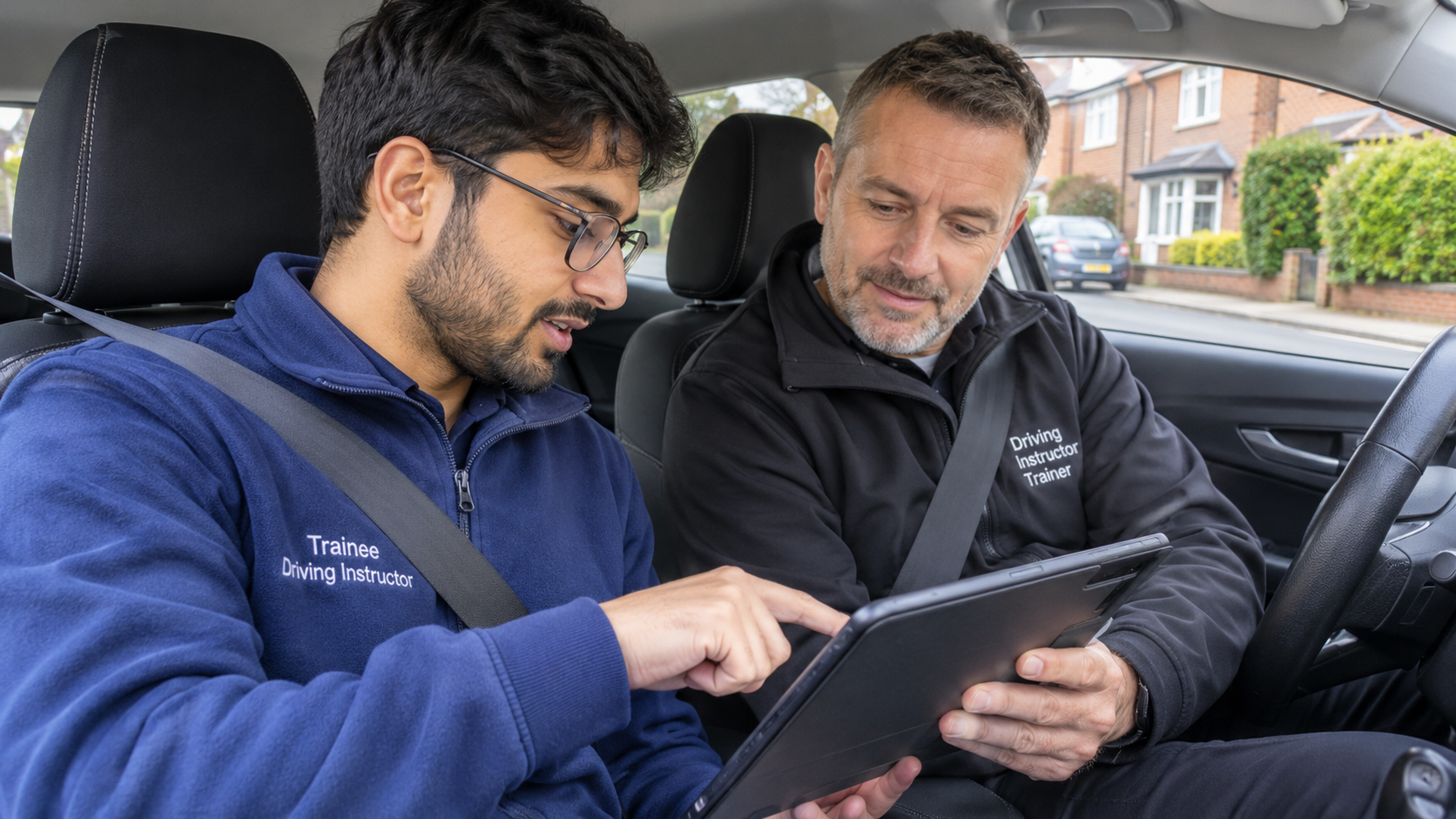
You don't have to take a course to become an ADI, but most people find it very hard to pass Parts 1 to 3 without specialist driving instructor training. Choose an ORDIT-registered trainer, check exactly what each part includes, avoid large upfront fees and guaranteed-job promises, and read any franchise terms before signing.
Driving instructor training is a significant investment, and many courses look alike on paper. This guide is a buyer's checklist, not a sales page. It separates what the DVSA actually requires from what a course adds. It also compares training formats and payment structures, and lists the red flags and questions that help you avoid a poor-value or high-pressure provider.
We don't recommend any particular trainer. The aim is to give you one yardstick for judging every provider you consider. Fees and rules change, so check each figure on GOV.UK before you book anything.
Do you have to take a driving instructor course?
No. To become an approved driving instructor (ADI), you must pass three tests: Part 1 checks your theory knowledge, Part 2 your driving and fitness to drive, and Part 3 your ability to teach learners. Until you qualify, you cannot charge for driving lessons unless you hold a trainee licence. Official guidance says it is illegal to do so.
You also have to meet the eligibility rules before you start:
- You must be at least 21 and have held a full UK, EU or EEA driving licence for at least three years.
- You must not have been banned from driving at any point in the four years before applying.
- In England, Scotland and Wales, you need a new criminal record check and must apply to the DVSA. A criminal record doesn't automatically rule you out, and you're checked again every four years when you renew your registration.
Training itself is optional. You don't have to do any before taking the ADI tests, but most people would find it very hard to pass without specialist training. GOV.UK's step-by-step route includes finding a registered trainer. The government also keeps an official register of driving instructor trainers, known as ORDIT.
Required by the DVSA: eligibility, background checks, three passes and registration. What a course adds: structured study, coaching from someone who knows the marking standards, mock assessments and in-car practice. You are paying for the second list, so judge courses on how well they deliver it.
What good ADI training covers for Parts 1, 2 and 3
Part 1: theory and hazard perception
Part 1 has 100 multiple-choice questions plus a hazard perception test, with 90 minutes for the questions. To pass, you need at least 85 out of 100 overall and at least 20 out of 25 in each of the four sections. Don't treat it as a formality: the section pass marks catch out candidates who score well overall.
Good training gives you:
- a study plan
- timed mock tests broken down by section
- hazard perception practice
- someone to explain why answers are right, not just which ones are
Part 2: driving ability
Part 2 lasts about an hour. It includes:
- an eyesight check
- 'show me, tell me' safety questions
- reversing manoeuvres
- independent driving
The standard is high: no more than six driving faults, and no serious or dangerous faults. A good course starts with an assessment drive, then sets a clear number of in-car hours with a trainer to correct the habits it finds.
Part 3: teaching ability
Part 3 assesses your teaching against the national standard for driver and rider training. This is where training quality matters most. Ask how much time you'll spend on:
- lesson planning
- risk management
- adapting lessons to each learner
- giving feedback
Also ask whether any of it involves real pupils, not just role-play. Some trainees take the optional trainee licence, which lasts six months and gives you paid teaching experience. If a course relies on it, ask what supervision and support you'll get during that time.
Course formats: intensive, part-time, online theory and in-car training
Most providers combine some of these formats. Choose based on your job, your finances and how you learn, not just on the fastest route.
- Intensive courses pack the training into a few weeks. They suit people who can take time off work, but leave little room to absorb feedback between sessions.
- Part-time or flexible courses run around evenings and weekends. They take longer, but suit career changers who need to keep earning.
- Online theory covers Part 1 through videos, question banks and virtual tutorials. It is cheaper and flexible, but needs self-discipline.
- One-to-one in-car training is essential for Parts 2 and 3. The trainer's skill and the number of hours matter far more than the brand on the car.
- Blended courses combine online theory with in-car sessions, and many providers offer them.
Whatever the format, ask for the number of in-car hours in writing, broken down by Part 2 and Part 3.
| Format | Best for | Main advantage | Watch out for |
|---|---|---|---|
| Intensive course | People who can take several weeks off | Fast, focused progress | Little time to absorb feedback; often paid upfront |
| Part-time or flexible | Career changers still working | Fits around a job; spreads cost | Longer overall; time limits still apply |
| Online theory | Self-motivated Part 1 candidates | Low cost, study anywhere | No help with Parts 2 and 3 |
| One-to-one in-car | Parts 2 and 3 | Personal coaching to the test standard | Hours not stated clearly; trainer not ORDIT-registered |
| Blended | Most trainees | Combines cheaper theory with essential in-car time | Online content used in place of in-car Part 3 training |
Pricing, payment structures and franchise deals explained
Your total cost has two parts: DVSA fees and the training itself. Published fees at the time of writing are:
Confirm every fee on GOV.UK before you budget.
Course prices vary widely between providers. When comparing quotes, check whether test fees, retakes and extra lessons are included.
Common payment structures
- Full upfront: often discounted, but it carries the most risk if you drop out or the provider disappoints.
- Staged payments: you pay for each part as you reach it. This protects you and keeps the provider motivated.
- Pay as you go: you pay per hour or per session. It is flexible and transparent, but harder to budget for.
- Finance: this spreads the cost, but read the credit agreement as carefully as the course terms.
Franchise deals
Many schools link training to a franchise. Once you qualify, you pay the school a regular fee for a car, branding and a supply of pupils. A franchise can help a new instructor get started. However, some providers discount training in return for signing one before you've even qualified.
Before agreeing, check:
- the minimum term
- the notice period
- any exit fees
- whether you must repay training costs if you leave early
Red flags and questions to ask before you sign up
Red flags
- Guaranteed jobs or earnings. No trainer can promise you a full diary or a set income.
- Large non-refundable upfront fees, especially with vague refund terms.
- Franchise lock-ins you must sign before qualifying, or that carry heavy exit penalties.
- Pressure to sign today, such as 'last place' or 'price rises tomorrow' tactics.
- Vague in-car hours, or Part 3 training delivered mainly by video.
- Pass guarantees whose small print only funds retakes after you've paid for more training.
- Trainers who aren't on the official ORDIT register, or who won't tell you their names.
Questions to ask the trainers
- Are you on the ORDIT register, and who exactly will train me in the car?
- How many in-car hours are included for Part 2 and for Part 3?
- What happens, and what does it cost, if I fail a part?
- Are DVSA test fees included in the price?
- What is your refund policy if I stop partway through?
- Is a franchise required? If so, what are the term, the fees and the exit costs?
- How do you prepare trainees for the Part 3 standard?
- Can I speak to recent trainees?
Ask for all answers in writing. A good provider will be happy to give them.
Studying for Part 1: theory test apps and self-study
Part 1 is the part you can most realistically prepare for on your own. Many trainees combine paid in-car training with self-study for the theory, which can lower the overall cost.
- ADI theory test apps. These let you revise in short bursts and take timed mock tests. Look for apps based on official DVSA revision material that include hazard perception clips.
- Official reading. Use the Highway Code and DVSA's own published guides as your core texts. Use summaries only to supplement them.
- Section-by-section tracking. Each of the four sections has its own pass mark, so track your weakest one rather than your average.
Plan your timing before you book. If you fail Part 1, your next attempt must be at least three working days later. More importantly, there is a two-year limit for completing the process after you pass the theory test. Don't take Part 1 until you're ready to commit to Parts 2 and 3.
Summary and next steps
Treat driving instructor training as a purchase, not a commitment you're talked into. The DVSA requires eligibility, checks and three test passes. A course is worth paying for only if it improves your chances of passing those tests.
- Check you meet the eligibility rules and current fees on GOV.UK.
- Shortlist trainers from the official ORDIT register.
- Compare in-car hours, payment structure and refund terms in writing.
- Walk away from guaranteed-job promises, large upfront fees and franchise lock-ins.
- Start Part 1 revision with an ADI theory test app and the official texts.
Once you qualify, you'll be running a small business. Tools like Driving Instructor Manager replace the paper diary with lesson booking, reminders and pupil records and progress notes. You can also track block payments and pupil balances. See the full feature list or pricing when you're ready, and browse our blog for more guidance for new ADIs.
Frequently asked questions
Do I need a course to become a driving instructor in the UK?
No, training isn't a legal requirement. You only need to meet the eligibility rules and pass the three ADI tests. In practice, most people find Parts 2 and 3 very hard to pass without specialist training from a registered trainer.
What is ORDIT?
ORDIT is the official register of driving instructor trainers kept by the government. Choosing a trainer from the register gives you some assurance about who is training you. You should still compare course content, in-car hours and terms.
Can I pass ADI Part 1 using only a theory test app?
Some people do, especially if they also read the official DVSA material and practise hazard perception thoroughly. The pass marks are demanding, and each section has its own threshold. Track your weakest section, not just your overall score.
Do I have to sign a franchise after training?
No, you can qualify and work independently. Some providers link discounted training to a franchise agreement. Read the minimum term, notice period and exit costs before signing anything.
Can I teach pupils before I've fully qualified?
You can apply for an optional trainee licence, which lets you gain paid teaching experience for a limited period while preparing for Part 3. Ask your trainer what supervision and support they provide during that time. Make sure the licence period fits within your overall time limit.
How do I spot a high-pressure provider?
Watch for urgency tactics, promises of guaranteed jobs or income, and requests for large non-refundable payments. A trustworthy provider will answer your questions in writing and give you time to decide. If they won't, look elsewhere.
Sources
- How To Become a Driving Instructor
- How to become a driving instructor
- How to become an Approved Driving Instructor (ADI)
- How to Become a Driving Instructor UK: ADI Tests, Fees
- Guide to Becoming a Driving Instructor - BSM Driving School
- Requirements to become a driving instructor in the UK
- ADI Part 1 Test: How to Book, Cost and How to Pass
- A guide to the ADI test parts one and two
- ADI Part 2 Test: How to Book, Cost and How to Pass
- BSM - ADI Part 2 Practical Test